
You’re standing in your outdated bathroom, weighing a significant decision. Will investing in a quality remodel actually increase your home’s value, or are you simply creating a space you’ll enjoy more? It’s a question we’ve answered for Central Valley homeowners for over 70 years, and the truth is refreshingly straightforward: a well-executed bathroom remodel does both.
The complete answer, however, is more nuanced than a simple yes or no. Let’s explore the real numbers, the factors that influence return on investment, and how to make strategic choices that maximize both your daily enjoyment and your financial return.
The Short Answer: What the Data Shows About Bathroom Remodel Value
Does redoing a bathroom add value? Absolutely. Midrange bathroom remodels recoup approximately 73.7% of their cost nationally, with some markets performing even higher.
In the Central Valley, these numbers hold true and often exceed national averages when the remodel matches neighborhood expectations. With Fresno’s median home price hovering around $415,000 and buyer demand remaining competitive, updated bathrooms consistently help homes sell faster and closer to the asking price. A midrange bathroom renovation costing $25,000–$40,000 typically adds $18,000–$32,000 to your home’s value. An upscale remodel in the $60,000–$80,000 range might return $42,000–$60,000.
However, these percentages tell only part of the story. The return depends heavily on your current bathroom’s condition, your home’s overall value, your neighborhood standards, and when you sell.
Here’s what matters most: If you’re planning to stay in your home for five or more years, the daily value of enjoying a beautiful, functional bathroom often exceeds the pure resale calculation. The return on investment includes years of improved daily experience, not just dollars at closing.
Beyond ROI: The Complete Value Picture
Smart homeowners know value is not just the price a buyer eventually pays. A quality bathroom remodel delivers three distinct types of value. Focusing only on resale percentages overlooks most of what you gain.
Financial Value: Faster Sales and Stronger Offers
An updated bathroom improves both price and market position. Homes with modern bathrooms often sell weeks faster than comparable properties with dated finishes. In the Central Valley’s competitive neighborhoods, a standout master bath can mean stronger offers, fewer price reductions, and lower carrying costs.
Functional Value: Solving Problems Before They Escalate
Issues like slow drains, cracked tile, and poor ventilation signal aging systems. Older bathrooms often come with outdated plumbing, limited storage, weak lighting, and inefficient layouts. Remodeling addresses these problems on your timeline while preventing moisture damage and mold concerns that buyers and inspectors flag.
Lifestyle Value: 2,500 Better Mornings
If you remain in your home for seven years after remodeling, that equals more than 2,500 mornings in a space designed for how you live. A functional, well-designed bathroom reduces daily friction and improves routines. For aging homeowners or multi-generational families, accessibility and smart design become practical necessities rather than upgrades.
The complete value equation balances financial, functional, and lifestyle returns. ROI calculations capture only one part of that equation. The true return includes how the space performs, protects, and supports daily life.
What Bathroom Upgrades Add the Most Home Value?
Not all upgrades deliver equal returns. Strategic choices maximize investment while creating spaces buyers truly want.
Complete Renovations Over Cosmetic Fixes
Full remodels outperform piecemeal updates. Buyers and appraisers see the difference between a freshly painted outdated bath and a cohesive redesign. Updating layout, fixtures, finishes, lighting, and storage together generates stronger returns than isolated improvements.
Quality Fixtures and Finishes
Well-chosen materials elevate value without overbuilding. In the Central Valley, that means frameless glass showers, quality widespread faucets, vessel or undermount sinks, and intentional tile work. The goal is sophistication that fits the neighborhood.
Improved Layouts
Smart layouts appeal to every buyer. Converting to a double vanity, separating the toilet for privacy, or adding linen storage solves universal problems. Function-driven upgrades consistently return their cost.
Modern, Neutral Design
Neutral palettes protect resale value. Warm grays, soft whites, natural wood tones, and marble-look surfaces stay relevant longer than bold trends. Timeless design keeps your buyer pool broad.
Essential Systems
Behind-the-wall improvements matter. Updated plumbing, proper ventilation, water-efficient fixtures, and adequate electrical capacity add real value even when unnoticed. NAR reports 81 percent of buyers consider updated bathrooms important or very important.
What Adds Less Value
Overly personalized design narrows appeal. Luxury that exceeds neighborhood standards limits return. Removing bathtubs in family-oriented areas can shrink your buyer pool.
The 30% Rule and Bathroom Remodels
The 30% rule suggests you should not invest more than 30% of your home’s value in total renovations. It protects against overcapitalization, where improvements cost more than they return at resale. The goal is to upgrade wisely without pricing your home beyond what the market supports.
Applied to bathrooms, the rule requires balancing your total renovation budget. On a $400,000 home, keeping overall projects under $120,000 maintains alignment with value. A $60,000 to $80,000 primary bath remodel can make sense as a lead improvement, but overspending on bathrooms while neglecting other key areas creates imbalance.
In the Central Valley, matching or slightly exceeding neighborhood standards delivers the strongest return. The most luxurious bathroom in a modest area rarely pays back its cost. If this is your forever home, exceeding the guideline may be worth it, but make that decision intentionally and understand you are prioritizing lifestyle over resale.
How Much Value Does a Bathroom Remodel Add?
Returns vary based on which bathroom you update and its current condition. Some upgrades simply help, while others materially change how buyers value your home.
Master Bathroom: Highest Return
Buyers prioritize the primary suite because they imagine daily life there. A dated master bath can reduce perceived home value by $20,000 to $30,000 compared to updated competitors. Investing $35,000 to $50,000 in a modern layout with double vanities, a walk-in shower, quality tile, and refined finishes typically adds $25,000 to $40,000 in value, roughly a 70 to 75 percent return, plus daily enjoyment until you sell.
Secondary and Guest Bathrooms
These baths support the sale rather than drive it. A dated hall bath next to a remodeled primary creates doubt about overall maintenance. Spending $15,000 to $25,000 usually returns $10,000 to $18,000 while reinforcing that the entire home has been well cared for.
Powder Rooms: First-Impression Spaces
Guests and buyers often see the powder room first. An outdated half bath can undercut the rest of the home’s presentation. An $8,000 to $12,000 update returns $6,000 to $9,000 and often delivers added value through listing photos and buyer recall.
Adding a Bathroom: Largest Impact
When a home lacks sufficient bathrooms, adding one can outperform most remodels. Converting unused space or adding a bath typically costs $25,000 to $45,000 and adds $20,000 to $40,000 in value. In Fresno’s family-focused market, moving from one bath to two expands the buyer pool and fundamentally changes how the home competes.
Factors That Influence Your Bathroom Remodel ROI
Bathroom remodel returns range widely for clear reasons. Specific choices determine whether your project lands near 80 percent or closer to 50 percent.
Execution Quality
Buyers notice craftsmanship, even when they cannot name it. Level cabinetry, clean tile cuts, consistent grout lines, and permitted work signal quality, while shortcuts raise red flags. A $40,000 remodel done poorly can return less than a $30,000 remodel done right, making experienced contractors a better investment than the lowest bid.
Design Choices
Timeless design protects long-term value. Clean lines, warm neutrals, and classic materials appeal to the broadest buyer pool, while trendy colors or bold patterns date quickly. The strongest returns come from spaces that feel refined and calming, not polarizing.
Timing and Market Conditions
Market conditions shape how value shows up. In hot Central Valley markets, updated bathrooms drive multiple offers and higher prices. In slower markets, they help homes sell faster and avoid reductions, preserving value rather than amplifying it.
Starting Condition
The more outdated the bathroom, the greater the upside. Transforming a visibly obsolete space removes a major objection buyers would otherwise discount in their offer. Upgrading from poor to good returns far more than moving from good to great.
Neighborhood Context
Returns depend on matching neighborhood expectations. High-end finishes work in higher-value areas but rarely pay off in modest neighborhoods. Contractors who understand local Central Valley submarkets help align your investment with what buyers will actually pay for.
How to Increase Home Value by $50,000
Can a bathroom remodel alone add $50,000 to your home’s value? Typically not, but it can be a strategic part of reaching that goal.
Adding $50,000 usually requires a comprehensive approach: a kitchen and master bathroom remodel combined, or updating multiple bathrooms plus other strategic improvements. A whole-house refresh addressing bathrooms, kitchens, flooring, and landscaping compounds value in ways individual projects cannot.
The key insight: comprehensive renovations often return more than the sum of individual projects because they create a completely transformed home. A beautiful new master bath in a house with an outdated kitchen feels unbalanced. A beautifully remodeled kitchen and master bath in a refreshed home feel intentional and valuable.
When a Bathroom Remodel Makes Financial Sense
Remodel now if:
- You’re planning to stay five or more years
- Your current bathroom has functional problems that will worsen
- Your bathroom is dramatically outdated compared to neighborhood standards
- You’re preventing water damage or structural deterioration
Consider waiting if:
- You’re selling within one to two years and your bathroom is functional
- Your bathroom was recently renovated and remains current
- Your budget is tight and other repairs take priority
The sweet spot: Remodeling three to five years before your planned sale maximizes both personal enjoyment and financial return. You enjoy your improved bathroom while owning it, and it still feels fresh when you list it.
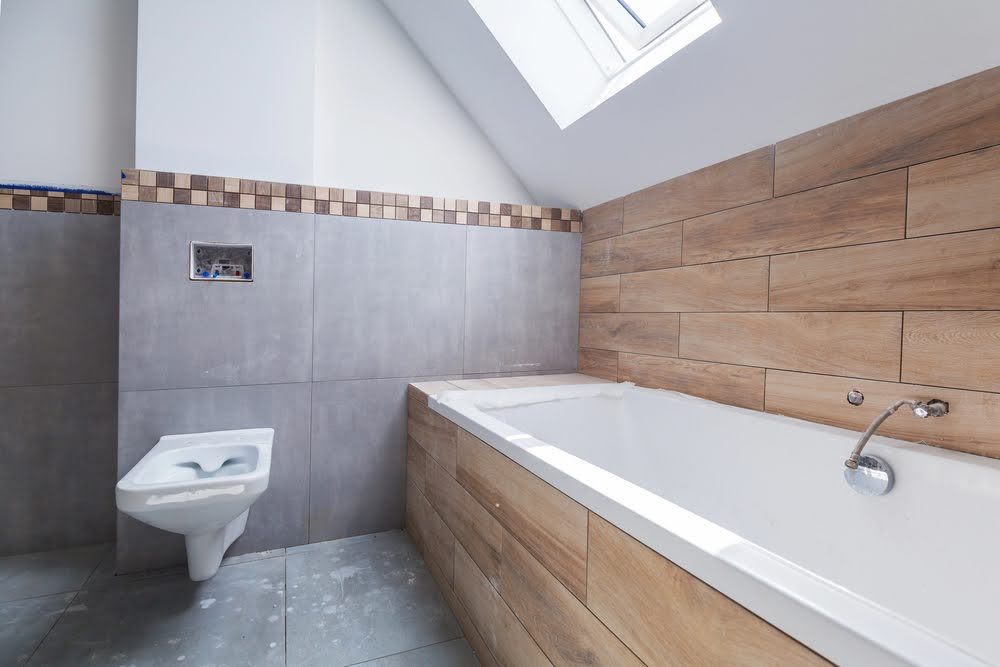
The Nelson Dye Approach: Value-Focused Bathroom Remodeling
Does a bathroom remodel increase home value? Yes, typically returning 70–80% of the cost at resale while delivering years of improved daily experience. Strategic upgrades, quality execution, and appropriate investment for your neighborhood maximize return.
Ready to create a bathroom that enhances both your daily life and your home’s value? Schedule a design consultation at our Fresno showroom. We’ll discuss your vision, provide transparent guidance on investment and return, and show you how 70+ years of masterful craftsmanship creates value that stands the test of time.
Contact Nelson Dye today at (559) 292-5785. Serving Central Valley homeowners with three generations of expertise in transformations that elevate both lifestyle and home value.